
Prototype
- Single prompt
- Manual data copy
- No permissions
- No evaluation
- Unclear ownership
Axionvex Tech
Production AI Workflow Engineering
Axionvex Tech designs, builds, and operates production AI workflows that connect company data, software, people, and decisions. Every system is engineered with approvals, evaluations, audit trails, monitoring, and clear ownership.

Intake
Business signal
Govern
Approval + eval
Operate
Audit + monitor
Short looping video of a global digital network visualization representing connected production AI systems. Decorative background media with no sound.
Example production workflow
Approval gateReference architecture · not live client data
Reference architecture · Evaluation enabled · Human approval required
Buyer recognition
AI initiatives usually fail after the demo, when real data, exceptions, permissions, human decisions, cost, and reliability enter the workflow. Axionvex Tech closes that gap.
Prototype
Production system
How intelligence moves
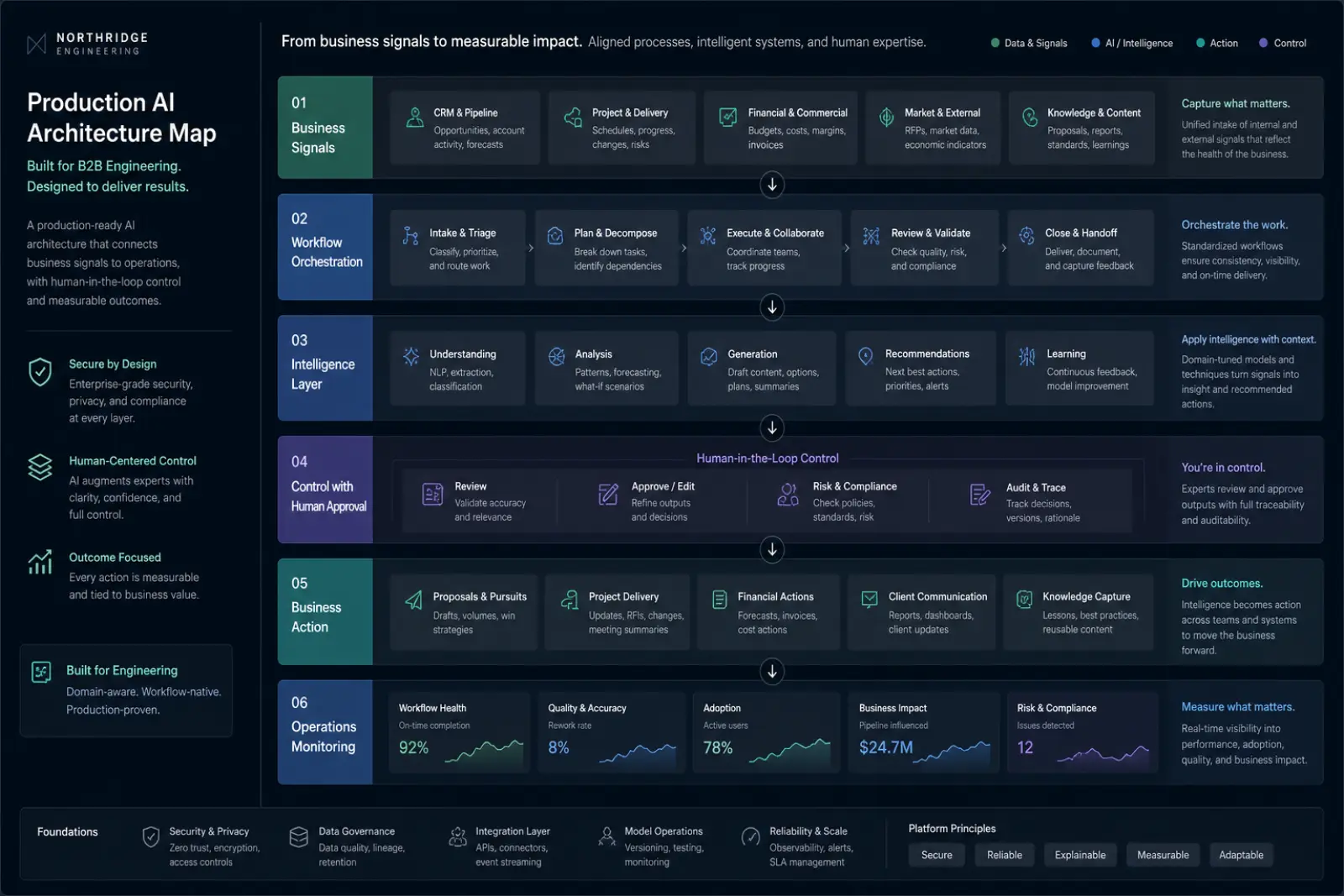
Reliable AI systems combine models, data, tools, permissions, people, evaluation, and operational ownership.
Operational transformation
Before
Fragmented tools, repeated copying, and delayed approvals.
After
Automate repetitive analysis, routing, drafting, and follow-up while keeping exceptions visible.
Apply the same rules, data sources, review requirements, and escalation paths across every case.
Track what the system saw, decided, executed, and what a person approved.
Primary use cases
Begin with one bounded workflow that has clear inputs, decisions, actions, and business consequences.
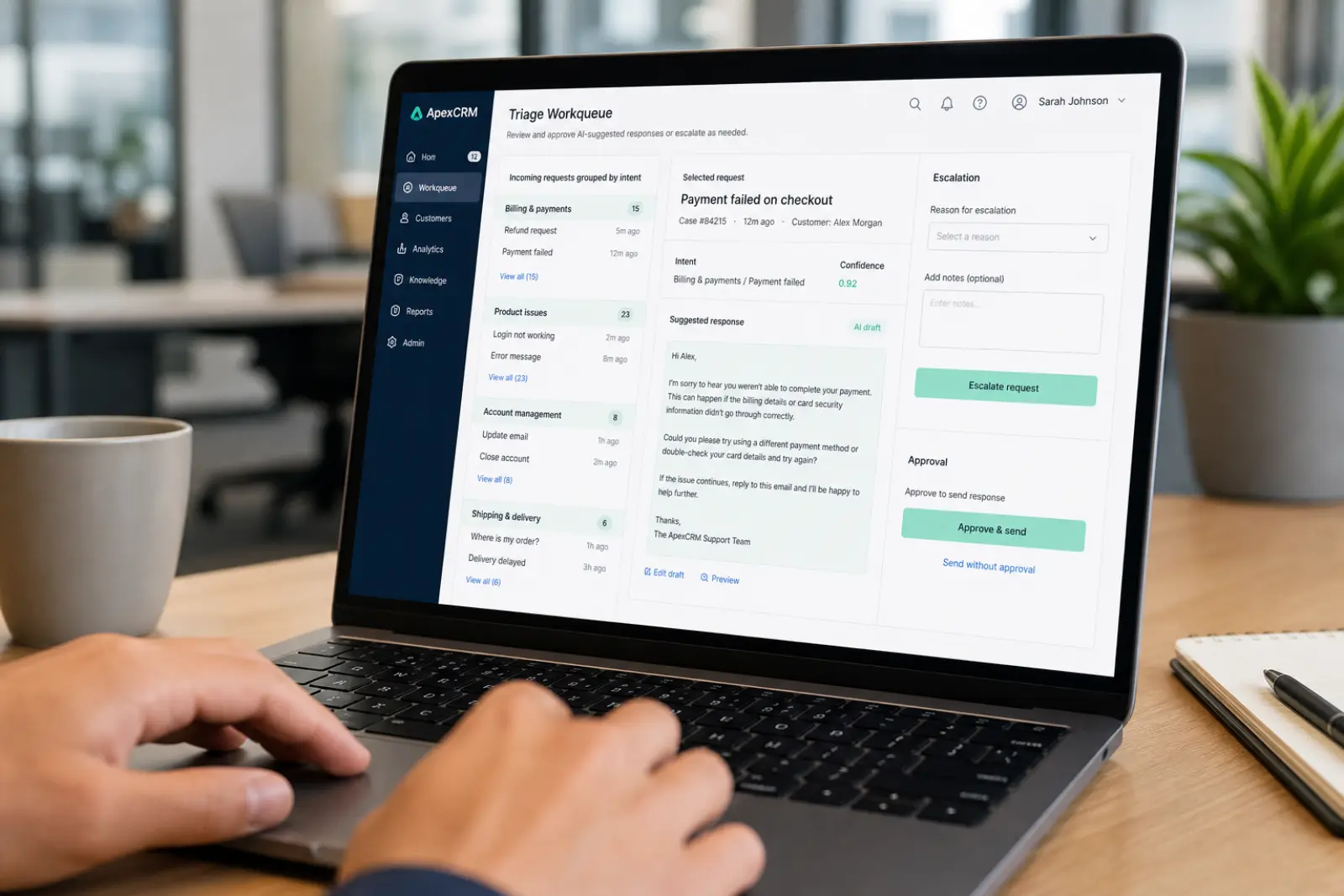 Conceptual UI
Triage requests, retrieve account context, draft or execute approved actions, escalate exceptions, and keep every decision visible.
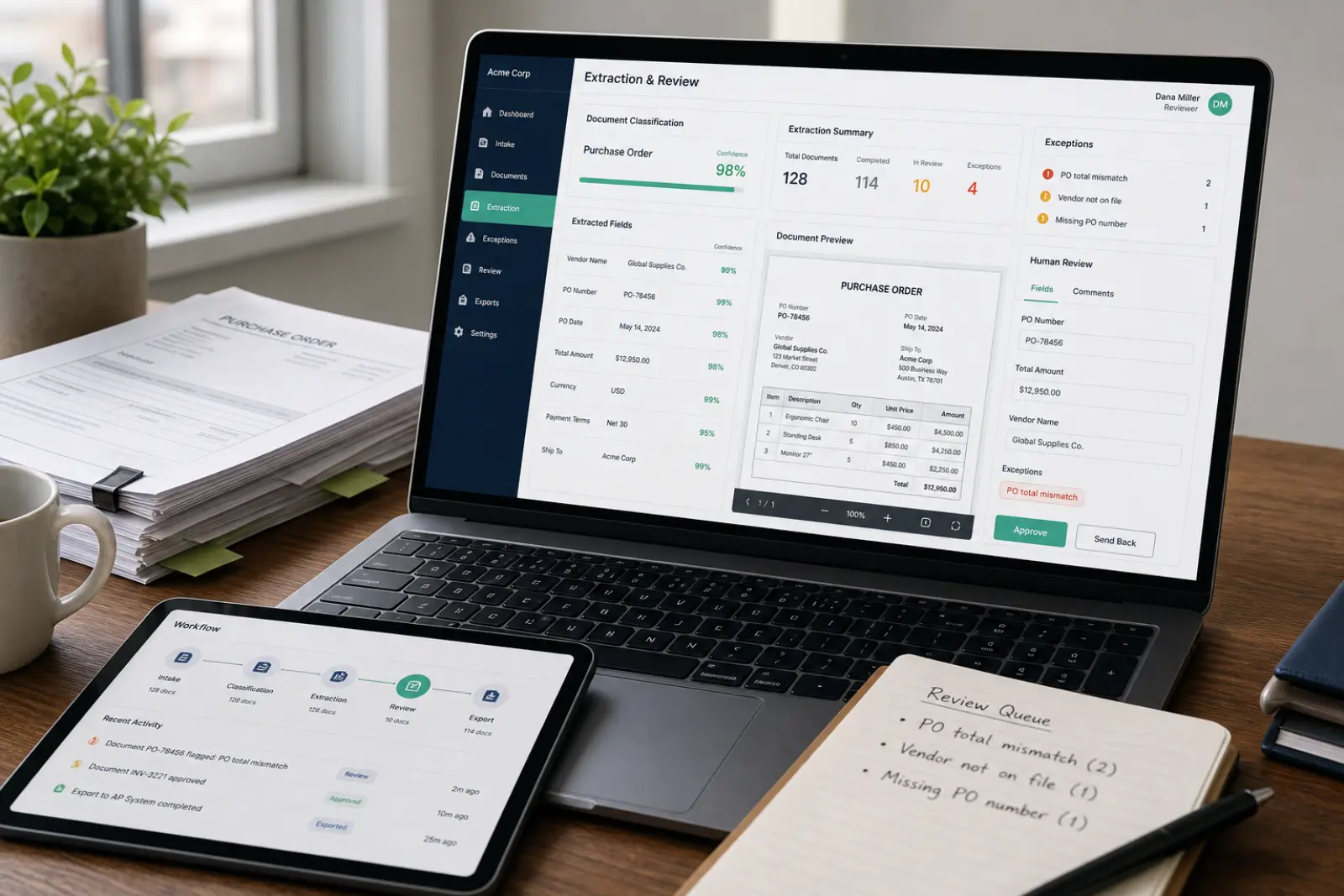 Conceptual UI
Extract, classify, validate, route, and review documents with confidence thresholds and human exception handling.
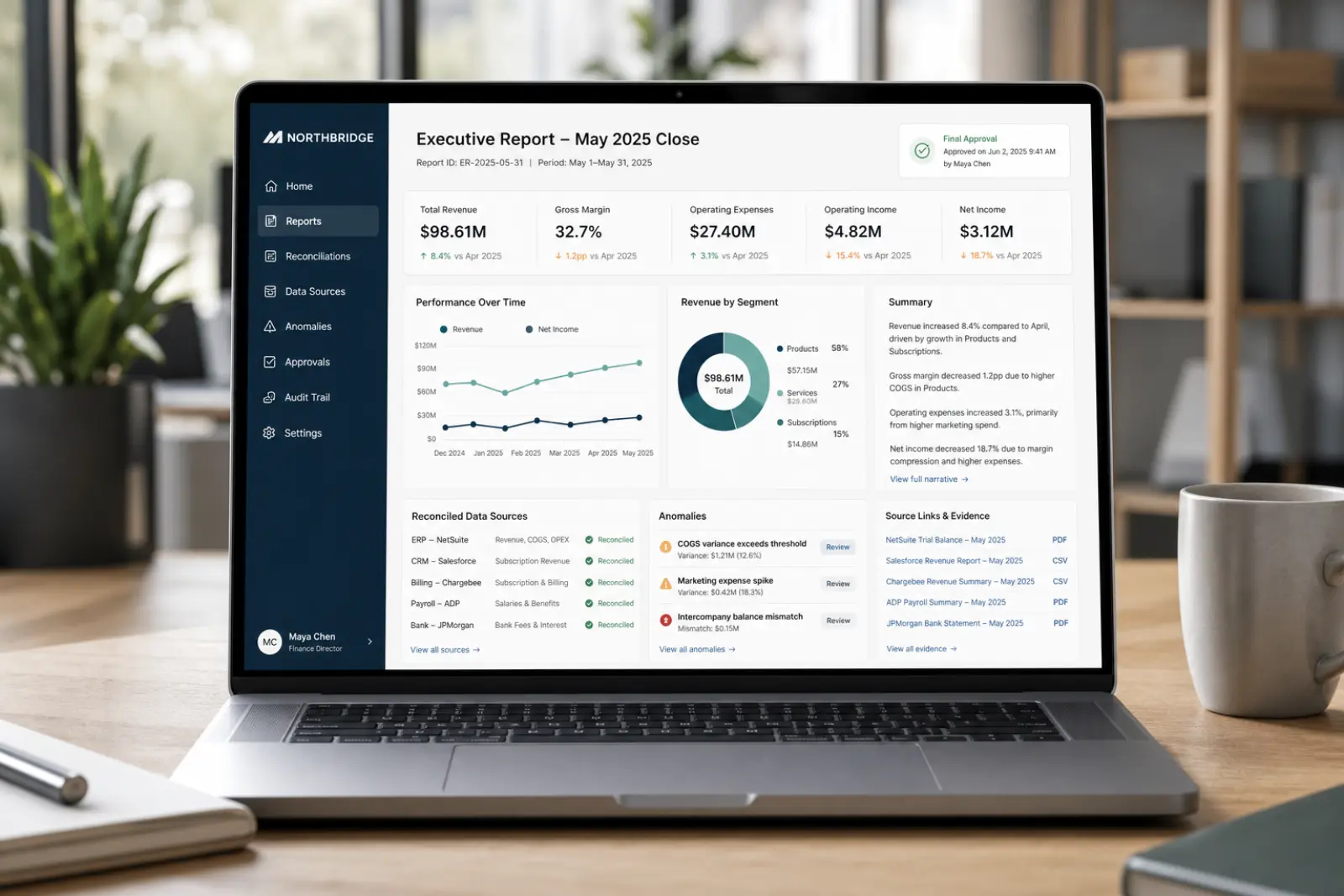 Conceptual UI
Turn scattered operational data into grounded reports, alerts, and decision-ready summaries.
Engagement models
Teams that need clarity before implementation.
Teams ready to validate one real workflow.
Teams operating and expanding production AI.
Selected work
Each project shows the starting condition, architecture, controls, and measurement status. Conceptual work is labeled as reference architecture or technical demonstration.
Redesigned a synchronous payment pipeline into event-driven architecture with retry logic and an audit trail.
Event-driven pipeline · Queue and retry · Audit trail
Controls: Retry policy, Audit trail, Observability
Measurement: In progress — numeric claims unpublished pending verification
Read the implementation →Custom ops platform replacing spreadsheets and manual steps with workflow automation, RBAC, and audit logging.
View project →Added observability, container-based deploys, and environment parity to a production backend with manual SSH deploys.
View project →AI standards
Production AI needs evaluation coverage, permission boundaries, human escalation, cost visibility, and named ownership.
Example evaluation view
Reference monitoring interface · illustrative workflow controls
Grounding status
Enabled
Illustrative
Tool-call success
Tracked
Example view
Evaluation coverage
Suite
Reference
Human escalation
Required
Policy
Latency
Monitored
Per workflow
Cost per workflow
Budgeted
Controls
Regression status
Passing
Illustrative
Audit events
Recorded
Immutable log
Fallback behavior
Defined
Branch ready
Control areas
Delivery process
01
02
03
04
05
01
02
03
04
05
Axionvex Tech combines AI engineering, product development, systems integration, and cloud operations. Engagements emphasize documented decisions, transparent project controls, and ownership after launch.
Insights
Workflow Design
Pick a bounded workflow with clear inputs, decisions, actions, and measurable consequences before you scale AI across the business.
Read article →Agent Evaluation
An agentic workflow needs more than prompt spot-checks. Define expected behavior, failure categories, release thresholds, and regression coverage before broad deployment.
Read article →Security and Governance
Use human approval where consequences are high, confidence thresholds where uncertainty is measurable, and fallbacks where systems or models fail predictably.
Read article →We will help map the operation, identify where AI can create measurable value, and define the controls required for production.
workflow.status
intake → context → reason → tools
approval.gate = required
eval.suite = enabled
production.state = stable
Illustrative status · not live data